Every couple planning an outdoor wedding venue in Vermont eventually asks the same question, usually with a bit of worry behind it. What happens if it rains? The honest answer is that it might, and a wedding with a plan already agreed at The Farm at Williams River House handles that far better than one leaning on a good forecast.
A rain plan for an outdoor farm wedding at The Farm at Williams River House in Southern Vermont should be agreed at booking, taking advantage of the property's full weekend buyout for scheduling flexibility, choosing among multiple ceremony settings like the hilltop gazebo or post-and-beam barn as backups, and naming one decision-maker with a clear weather trigger ahead of the day.
Building A Rain Plan Before You Need It
A rain plan is not a backup you hope never to use. It belongs in the schedule from the day you book, agreed with your venue and shared with your vendors. What follows covers Vermont weather season by season, how a full weekend changes your options, and the decisions worth settling long before the week of the wedding.
Vermont Weather, Season By Season
Southern Vermont weather turns quickly, and each season carries a different risk rather than a simple wet or dry answer. Spring is unpredictable and can stay cool well into May. Summer afternoons often bring short heavy showers that pass inside the hour, which is a scheduling problem more than a washout.
Autumn is a popular season in the Okemo Valley and is generally settled, though mornings turn cold and the light goes earlier than people expect. Winter brings snow rather than rain, which affects access and footwear more than the ceremony itself. Knowing which of these you are working with shapes the plan more than any single forecast ever will.
Why A Full Weekend Gives You Room To Move
This is where the buyout model earns its place. At The Farm at Williams River House the property is yours from Friday through Sunday, with no second event waiting on the space behind you.
That matters when the weather does something unhelpful. Ask the venue whether the timing can move on the day, because a single event weekend usually allows more room than a property running back to back bookings on a fixed schedule. If the morning looks clear and the afternoon does not, being able to shift things is worth more than any tent. Couples choosing a Southern Vermont wedding venue that hosts one wedding at a time keep options that most outdoor weddings do not have.
Choosing Between The Ceremony Settings
A property with several outdoor settings is a rain plan in itself. The hilltop gazebo, the riverside terrace along the Williams River, the open hayfields, and the post and beam barn all sit differently in weather, and knowing that in advance saves an awkward conversation on the morning.
Walk all of them when you tour. Ask which handles wind, which drains well after heavy rain, and which is easiest to reach if the ground has gone soft underfoot — our post on things to consider when selecting a wedding venue covers more of what to look for on that walkthrough. Ask specifically what the venue recommends as your alternative, since they have watched a lot of weather come across that valley and you have not. Then agree on a first choice and a backup with The Farm at Williams River House and get both written into your paperwork rather than left as an understanding.
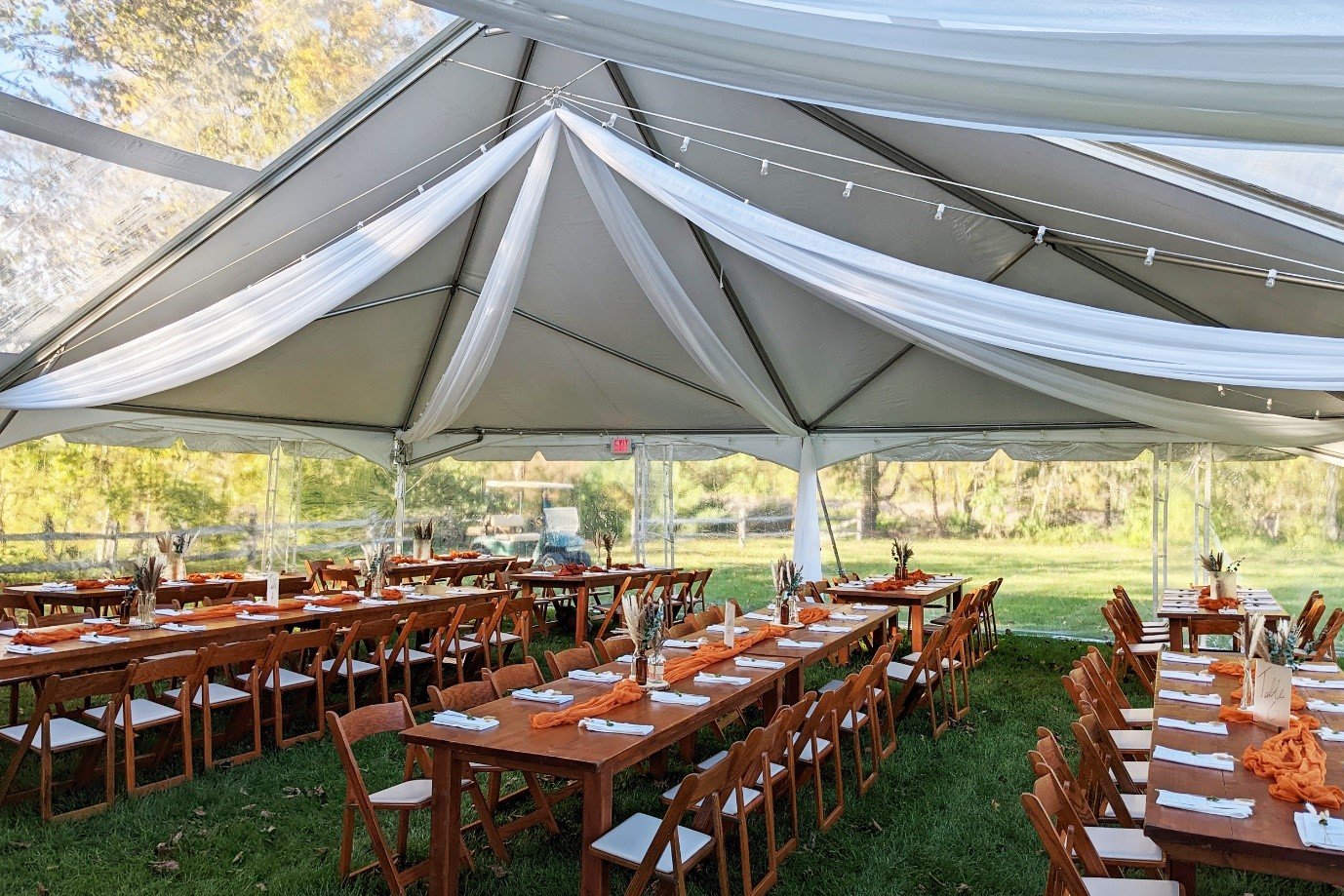
Agreeing Who Makes The Decision
Somebody has to make the call, and it should not be either of you on the morning of your wedding. Name one person, usually your planner or coordinator, and agree on a cutoff time with them well ahead of the day. For an afternoon ceremony, that call is normally made in the morning.
Agree on the trigger too, so it is not left to opinion. Steady rain at the ceremony hour means you switch. A passing shower with clear sky behind it usually does not. Write those decision points down and share them with your photographer, florist, and anyone else setting up outside, so when the call comes nobody is standing around asking what happens now.
Keeping Guests Comfortable
Guest comfort is the part couples forget until they are standing in it. A basket of umbrellas by the entrance costs very little and photographs better than you would think. Blankets do more than people expect at an autumn evening ceremony in Vermont.
Tell guests in advance that the ceremony is outdoors on a farm and the ground may be soft, so nobody turns up in the wrong shoes. Think about where people wait if a shower blows through and how far that is from the ceremony spot. And talk to your photographer about wet weather light, which is often kinder than bright midday sun. A grey afternoon is not a ruined wedding, and most photographers will tell you the same.
Conclusion
A rain plan is not pessimism, it is preparation. Settle your alternative setting when you book, agree on who makes the call and when, tell your vendors, and think through what your guests will need if the weather turns. Do that and a wet Saturday becomes an adjustment rather than a disaster. A property with several ceremony settings and a full weekend hold gives you room to move, which is the entire point. You can explore the venue features to see how the settings at The Farm at Williams River House sit alongside each other across a weekend.
Frequently Asked Questions
When should we decide on a rain plan?
When you book, not the week of the wedding. Your alternative should be agreed with the venue and passed on to your vendors from the start.
Who makes the call on the day?
Hand it to your planner or coordinator with an agreed cutoff time. It is not a decision either of you should be making in the morning.
What are the alternatives if the weather turns?
The property has several ceremony settings. Ask during your tour which one the venue recommends as your backup, then confirm it in writing.
Does rain ruin the photographs?
Not usually. Overcast light is often softer than direct sun, and most photographers are comfortable working in it when they know the plan in advance.